
HVAC Installation in Cumming, GA
.webp)
HVAC installation in Cumming, GA provides a comprehensive overview of evaluating, selecting, and installing a new system. The guide emphasizes accurate load calculations, duct sizing, and energy efficiency considerations to ensure comfort and cost savings. It covers home assessment steps, equipment matching, ductwork modifications, permitting, installation, testing, and handoff, plus warranty and maintenance planning. By outlining timelines, equipment options, and best practices, it helps homeowners understand what to expect and how to achieve reliable, long-lasting climate control in Forsyth County homes.
HVAC Installation in Cumming, GA
Replacing or installing a new HVAC system in Cumming, GA is a major home investment that affects comfort, energy bills, and indoor air quality. With hot, humid summers and mild winters in Forsyth County, the right system must manage cooling load, humidity control, and air distribution efficiently. This page explains the full process of new HVAC system installation in Cumming, GA, so you know what to expect from assessment and equipment selection through permitting, installation, testing, and handoff.
Why a proper HVAC installation matters in Cumming, GA
Cumming’s climate places heavy demands on air conditioning during long, humid summers. An improperly sized or poorly installed system will short-cycle, struggle with humidity, and increase energy costs. Proper installation delivers:
- Stable indoor temperatures and better humidity control
- Lower monthly energy use with correctly sized, high-efficiency equipment
- Longer equipment life and fewer repairs
- Improved indoor air quality through proper airflow and filtration
Common HVAC installation scenarios in Cumming, GA
Homeowners typically need one of the following:
- Full system replacement (old furnace/AC to a modern split system or heat pump)
- New installation for an addition or newly finished basement
- Conversion from fossil fuel heating to electric heat pump
- Ductwork retrofit or replacement for older homes
- Upgrading to variable-speed systems, zoning, or smart controls for better humidity management
Home assessment and load calculations
A precise home assessment is the foundation of any successful installation. Expect:
- A walkthrough to inspect insulation, windows, attic access, and current equipment
- Measurement and documentation of duct layout, attic and crawlspace conditions, and return locations
- A professional load calculation (Manual J) to determine exact heating and cooling requirements, not just rule-of-thumb sizing
- Duct sizing and layout analysis (Manual D) when ductwork changes are requiredThese calculations ensure the selected equipment matches your home’s real thermal load in Cumming’s humidity and temperature patterns.
Guidance on selecting energy-efficient models
When evaluating equipment, consider:
- SEER and SEER2 ratings for cooling efficiency; higher ratings reduce energy use during Cumming’s hot months
- HSPF or AFUE for heating efficiency if your system includes a heat pump or furnace
- Variable-speed blowers and multi-stage compressors for improved humidity control and consistent comfort
- Matched system components (indoor coil and condenser) to preserve efficiency and warranty coverage
- Compatibility with advanced thermostats and zoning systems for targeted comfort and lower run timesEnergy-efficient systems often deliver the best long-term value in climates with extended cooling seasons.
Ductwork evaluation and modifications
Duct condition has a major impact on system performance:
- Common issues: leaks, undersized returns, poor insulation in attic ducts, and restrictive vents
- Typical solutions: sealing with mastic, adding return pathways, resizing or replacing segments, and insulating exposed ducts
- When installing new equipment, bringing ductwork up to current standards prevents pressure imbalances, hot/cold spots, and premature equipment wear
Step-by-step installation process
- Pre-install planning: finalize equipment selection, review load calculations, and order parts and materials.
- Site preparation: protect floors and furniture, stage equipment, and prepare electrical and refrigerant routing.
- Removal of old equipment: safe disconnect and proper disposal of replaced units per local guidelines.
- Duct adjustments and sheet metal work: implement sealing, resizing, or new duct runs as required.
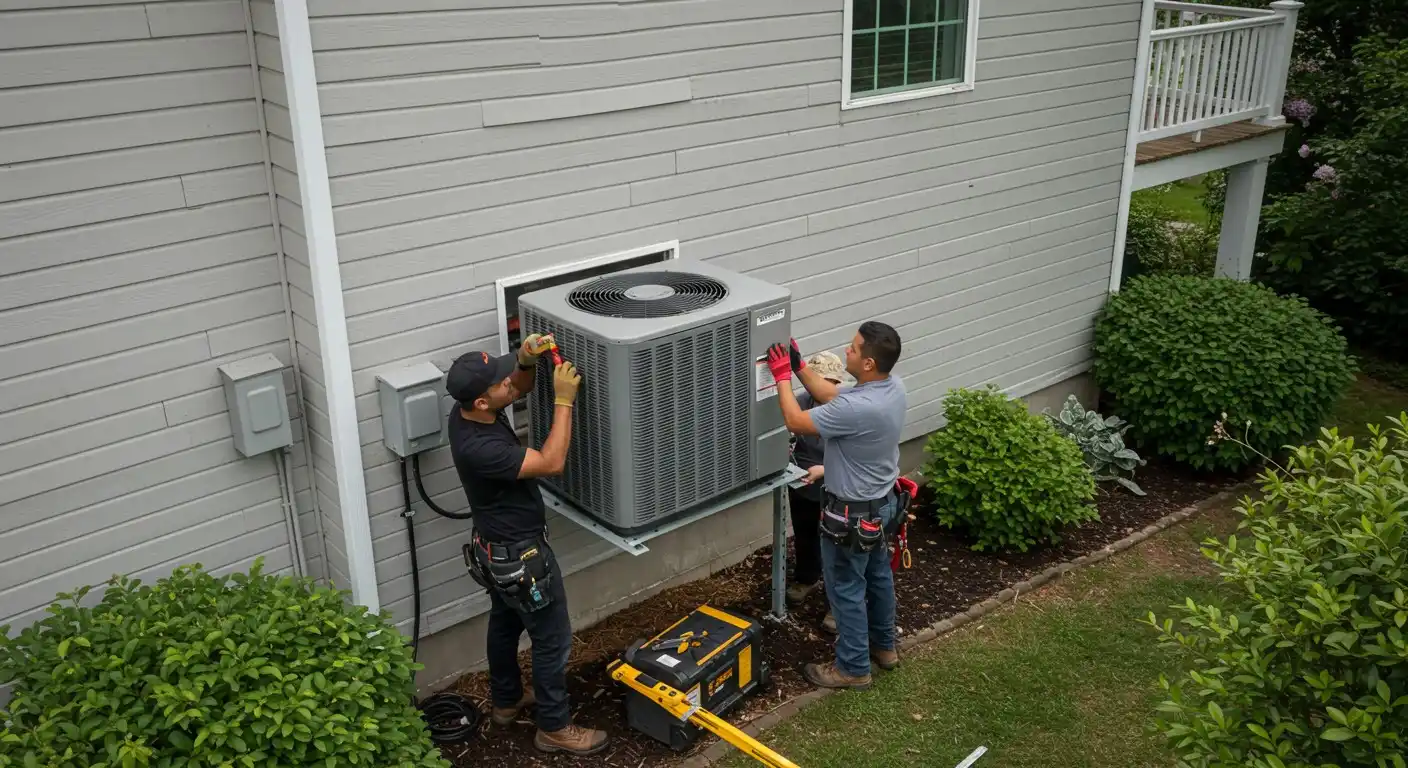
- Installation of indoor and outdoor units: mount, level, and connect refrigerant lines, condensate, and electrical.
- Refrigerant charging and system balancing: set correct refrigerant charge and adjust airflow for design specifications.
- Final commissioning: thorough testing and adjustments before handoff.
Permitting and code compliance in Cumming
Permits and inspections are standard for HVAC work in Forsyth County and neighboring jurisdictions. Licensed installers will:
- Secure required permits from the local building department
- Ensure electrical, gas, and refrigerant work meets code
- Schedule and pass required inspections to document code complianceFollowing permit procedures protects homeowners, ensures safety, and is often required for warranty validation and future home resale.
Post-install testing and commissioning
Professional commissioning confirms the system operates as intended:
- Measure airflow, static pressure, and temperature split across the coil
- Verify correct refrigerant charge and compressor operation
- Test thermostat programming and zone controls
- Confirm condensate drainage and safety controlsA documented commissioning report provides a record of performance at handoff.
Warranty and maintenance handoff
After installation you should receive:
- Manufacturer warranty registration assistance and documentation
- Clear owner’s manual and recommended maintenance schedule
- Explanation of which actions void warranties (improper filters, unauthorized service)
- Guidance on seasonal tune-ups, filter replacement frequency, and when to schedule professional serviceA structured maintenance plan preserves efficiency and protects warranty coverage.
Financing options and incentives
Many homeowners choose financing to spread installation costs. Typical options include:
- Fixed-term financing or payment plans through third-party lenders
- Manufacturer promotional financing for qualifying equipment
- Potential utility or manufacturer incentives for high-efficiency systemsWhen evaluating offers, compare total cost, interest rates, and loan terms, and confirm who handles paperwork for any incentives.
Expected timelines for HVAC installation in Cumming, GA
- Initial assessment and load calculations: 1 day to 1 week, depending on scheduling.
- Equipment selection and ordering: 3 days to 2 weeks, depending on availability.
- Permitting and approvals: typically 3 to 14 business days; can vary with county workload.
- Installation: 1 to 3 days for standard single-family systems; more complex projects may require additional days.
- Inspection and final commissioning: usually within a few days after installation, based on inspector availability.
Final notes and homeowner tips
In Cumming homes, prioritize humidity control, properly sized equipment, and duct integrity to handle summer demands. When comparing proposals, look beyond price: evaluate load calculations, scope for ductwork, efficiency ratings, warranty terms, and documentation of permitting and commissioning. Proper planning and a methodical installation deliver the comfort and energy savings Cumming homeowners expect from a modern HVAC system.
Customer
Testimonials


Service Areas