
Heating Repair in Johns Creek, GA
.webp)
When it comes to heating repair in Johns Creek, GA, we explain why timely service is essential, outline common issues like no heat, uneven heating, unusual noises, and safety concerns, and present our step-by-step diagnostic approach. We detail parts replacement options, comparing OEM versus aftermarket, and our high workmanship standards, with emphasis on safety, transparency, and warranty considerations. We'll help you compare repair versus replacement, highlight our emergency response protocols, detail our technician qualifications, and offer valuable maintenance tips to extend your system's life and prevent future emergencies.
Heating Repair in Johns Creek, GA
Keeping your home warm and safe during the cooler months in Johns Creek, GA is essential. Even though winters here are milder than in northern states, occasional cold snaps, high humidity, and the strain of year-round climate control can expose weaknesses in heating systems. This page explains how professional heating repair in Johns Creek, GA addresses common failures, the diagnostic process, parts replacement and safety checks, expected repair times, transparent cost explanations, emergency response, technician qualifications, and guidance on when repair is the best choice versus replacement.
Why timely heating repair matters in Johns Creek, GA
Johns Creek homes often use heat pumps, furnaces, or hybrid systems to balance efficiency and comfort. High humidity and pollen loads in the Atlanta metro area can lead to clogged filters, corrosion, and reduced system performance. Small problems left unaddressed can become emergency failures during an unexpected cold spell. Prompt repair restores comfort, improves energy efficiency, and reduces the risk of unsafe conditions like carbon monoxide leaks or electrical faults.
Common heating repair issues in Johns Creek, GA
- No heat or intermittent heat: Symptoms include system cycling on and off, weak airflow, or complete failure to start. Causes range from thermostat faults to ignition or control board issues.
- Uneven heating or cold spots: Often due to duct restrictions, blower motor problems, or failing zone controls.
- Unusual noises: Squealing, banging, or rattling can indicate belt wear, bearing failure, loose components, or ignition delays.
- High utility bills with normal use: Reduced system efficiency from dirty coils, poor airflow, or failing components.
- Frequent short-cycling: Typically caused by incorrect system sizing, refrigerant issues in heat pumps, or blocked airflow.
- Pilot or ignition problems: Older furnaces may have pilot light or thermocouple issues that prevent safe operation.
- Safety alarms and odors: Any smell of gas, persistent burning odor, or carbon monoxide alarm activation requires immediate attention.
Step-by-step diagnostic process
A methodical diagnostic approach ensures accurate repairs and cost transparency:
- Initial assessment: Confirm symptoms, system history, and recent changes in performance or sounds. For emergency calls, verify safety concerns first.
- Safety checks: Inspect for gas leaks, carbon monoxide, electrical hazards, and adequate ventilation before performing deeper diagnostics.
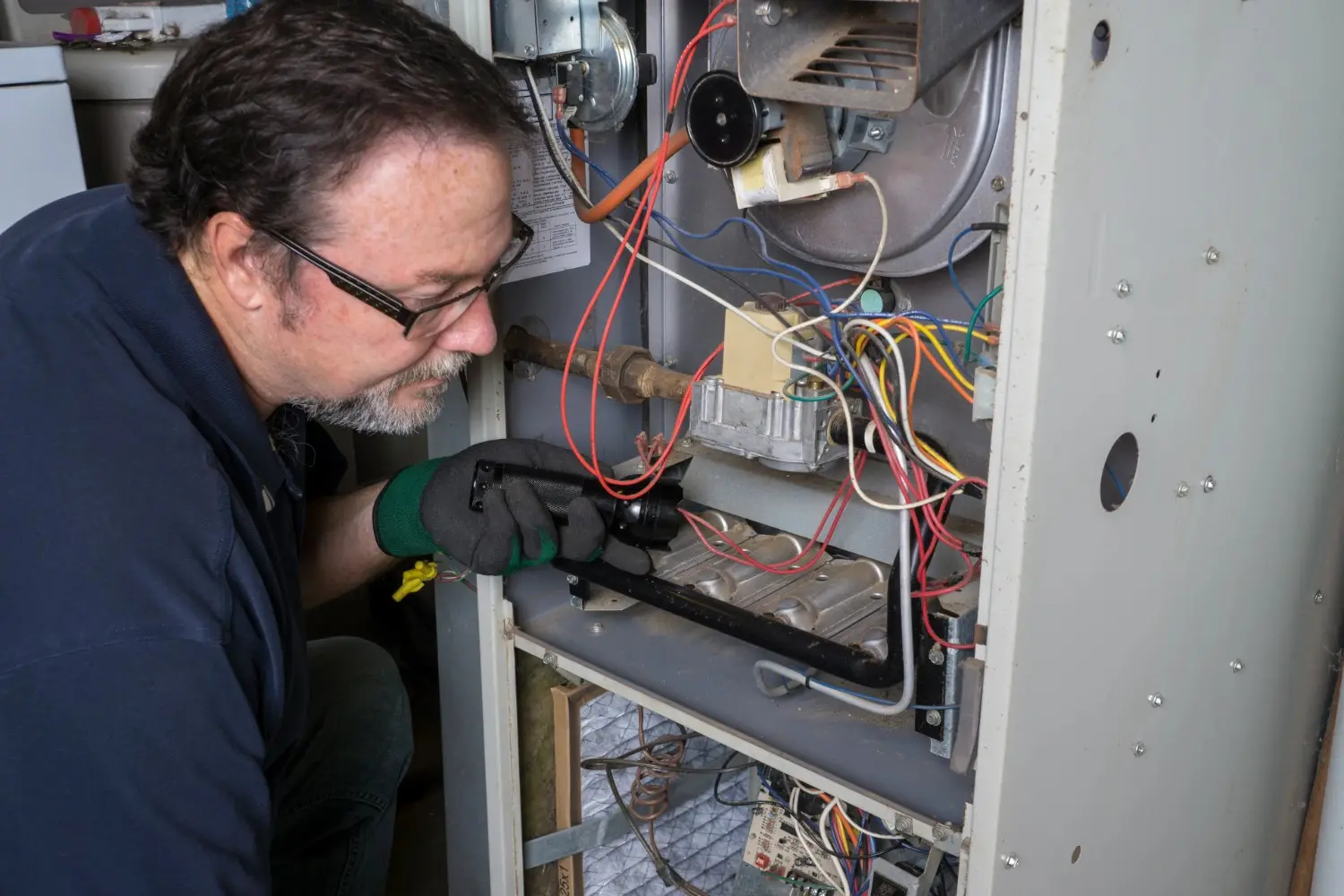
- Visual and mechanical inspection: Examine exterior unit, burners, heat exchanger, blower assembly, belts, filters, and wiring for obvious failures.
- System operation tests: Run the system to observe startup sequence, thermostat response, flame characteristics, electrical draw, and refrigerant pressures if applicable.
- Component-level testing: Use meters and diagnostic tools to test ignition systems, motors, capacitors, control boards, and sensors.
- Diagnosis report: Provide a clear explanation of findings, prioritized repair needs, and options with pros and cons so you can make an informed decision.
Repairs, parts replacement, and quality considerations
- Common parts replaced: Thermostats, capacitors, contactors, blower motors, igniters, heat exchangers, belts, bearings, and control boards. For heat pumps, compressors and reversing valves may be replaced.
- OEM vs aftermarket parts: Technicians will explain the differences between original equipment manufacturer parts and high-quality aftermarket alternatives, including expected lifespan and warranty implications.
- Repair standards: Repairs follow manufacturer specifications, local building codes, and safety best practices to preserve system performance and warranty coverage.
- Documentation: After repairs, you should receive a written summary of work performed, parts installed, serial numbers where applicable, and recommended next steps.
Safety checks performed during every repair
- Combustion and flue inspection for safe exhaust flow and signs of cracks or corrosion.
- Carbon monoxide testing to detect hazardous levels.
- Gas line integrity and pressure checks for gas-fired systems.
- Electrical safety tests including voltage, current draw, and secure connections.
- Operational safety devices testing such as limit switches, pressure switches, and the thermostat interlocks.
Estimated repair times and cost transparency
Repair times vary with the issue but generally fall into these ranges:
- Minor repairs and adjustments: a few hours.
- Component replacement (motors, igniters, control boards): half day to a full day depending on parts availability.
- Complex jobs involving heat exchangers or major parts: one to several days.Technicians provide upfront, itemized estimates outlining labor, parts, warranty coverage, and if any follow-up service is likely. Estimates explain which items are required for safe operation and which are optional improvements, so you understand where costs come from and why certain repairs are prioritized.
Emergency heating repair in Johns Creek, GA
In cold spells or when safety concerns arise, emergency repair response focuses on stabilizing the situation: restoring heat where possible, shutting down unsafe equipment, or isolating gas/electrical hazards. Technicians trained for emergency service will perform rapid diagnostics and temporary fixes when needed, followed by scheduled permanent repairs. Emergency responses also include safety monitoring until the system is restored to normal operation.
Technician qualifications and professionalism
Qualified technicians for heating repair in Johns Creek, GA typically have:
- Certification in HVAC service and safety training relevant to gas and electrical systems.
- Experience with local common equipment types such as heat pumps and modern high-efficiency furnaces.
- Continuing education on refrigerant handling, combustion analysis, and manufacturer-specific repair procedures.
- Background checks and clear communication practices to explain technical issues in straightforward terms.Expect technicians to carry diagnostic tools, commonly used parts for quick repairs, and documentation that details the work performed.
When to repair versus replace
Repair is often the best choice when:
- The issue is isolated and the rest of the system is in good condition.
- The repair restores safe, efficient operation without frequent recurrence.
- The system is relatively new and still within its useful life.Replacement should be considered when:
- The heat exchanger is cracked or poses a safety risk.
- Repair costs approach or exceed a significant portion of replacement cost.
- The system is old, inefficient, and likely to need repeated repairs soon.
- You want to upgrade to a higher-efficiency system that will reduce long-term operating costs or address comfort needs better.A professional assessment will weigh repair cost, expected remaining life, energy efficiency, and your home comfort goals to make a recommendation.
Ongoing benefits and maintenance tips
Regular maintenance prevents many common heating repairs. Simple practices for Johns Creek homes include:
- Replacing or cleaning filters every 1 to 3 months during use.
- Keeping outdoor units clear of debris and vegetation.
- Scheduling annual tune-ups before the heating season to inspect and calibrate the system.
- Monitoring for early signs of trouble such as odd noises, reduced airflow, or fluctuating thermostat readings.Routine care extends equipment life, preserves efficiency in our humid climate, and reduces the chance of emergency repairs during cold weather.
With clear diagnostics, safety-first repairs, transparent pricing explanations, and qualified technicians familiar with the needs of Johns Creek homes, heating repair restores comfort and confidence in your home heating system.
Customer
Testimonials


Service Areas