
Heating Maintenance in Johns Creek, GA
.webp)
Heating Maintenance in Johns Creek, GA, focuses on preventing cold-weather failures through proactive, locally tailored service. Our program emphasizes seasonal tune-ups for heat pumps and furnaces, thorough safety and efficiency checks, duct inspection, and component lubrication, plus flexible coverage and priority scheduling. Homeowners like you will learn how regular maintenance minimizes uneven heating, reduces energy costs, protects warranties, and extends equipment life. We outline typical maintenance visits, share practical upkeep tips, and explain the measurable benefits of ongoing care for your comfort and reliability year-round.
Heating Maintenance in Johns Creek, GA
Keeping your home comfortable through Johns Creek winters starts with a dependable heating maintenance program tailored to local conditions. Regular maintenance reduces emergency breakdowns during cold snaps, improves system efficiency in homes that use heat pumps and furnaces, and protects manufacturer warranties. The information below explains what a comprehensive heating maintenance plan looks like in Johns Creek, common local issues, the step-by-step service process, and the measurable benefits of proactive care.
Why heating maintenance matters in Johns Creek, GA
Johns Creek experiences mild winters with occasional cold snaps and high humidity through much of the year. Many homes use heat pumps for year-round comfort, while others have gas or electric furnaces. Local factors that make scheduled maintenance important include:
- High humidity and pollen that increase strain on heat exchangers, coils, and air filters.
- Seasonal temperature swings that expose systems to rapid cycling and thermal stress.
- Occasional cold periods when an unmaintained system is likely to fail.
- The need to maintain warranties that often require documented annual service.
Regular, professional maintenance keeps systems running efficiently, prevents costly emergency repairs, and helps maintain healthy indoor air quality in Johns Creek homes.
Common heating problems in Johns Creek homes
Homeowners in the area commonly report the following heating issues:
- Uneven heating or cold spots caused by airflow restrictions or duct leaks.
- Short cycling from clogged filters, dirty coils, or failing control components.
- Rising energy bills due to decreased system efficiency.
- Failure to start during cold weather because of worn capacitors, weak thermostats, or neglected motors.
- Moisture-related problems like moldy ducts or condensation on coils in high-humidity months.
- Safety concerns with gas furnaces such as cracked heat exchangers or venting issues.
A structured maintenance program addresses these issues proactively, lowering the chance of inconvenient or dangerous failures.
What a comprehensive heating maintenance program includes
A full maintenance agreement for heating systems in Johns Creek typically offers a combination of preventive tasks, flexible coverage options, and service guarantees. Core elements include:
- Seasonal tuneups for heat pumps, gas furnaces, and electric heaters
- Inspection and cleaning of burners, heat exchangers, and coils
- Filter inspection and replacement guidance or scheduled filter swaps
- Thermostat calibration and operational testing
- Blower motor, belts, and fan inspection, cleaning, and lubrication
- Electrical connection checks and safety control tests
- Combustion analysis and carbon monoxide safety checks for gas systems
- Refrigerant level and reversing valve checks for heat pumps
- Condensate drain clearing and drain pan inspection
- Ductwork assessment and sealing recommendations
- Documented inspection reports with findings, readings, and recommended repairs
- Priority scheduling for members and options for parts and labor coverage
Service agreements are customizable. Typical tiers may offer annual vs semiannual visits, add-on coverage for parts and labor, or extended checks tied to manufacturer warranty requirements.
Typical maintenance visit: step-by-step
A single maintenance visit follows a consistent diagnostic and service sequence to ensure reliable results:
- System start-up and operational check to observe behavior and listen for abnormal noises.
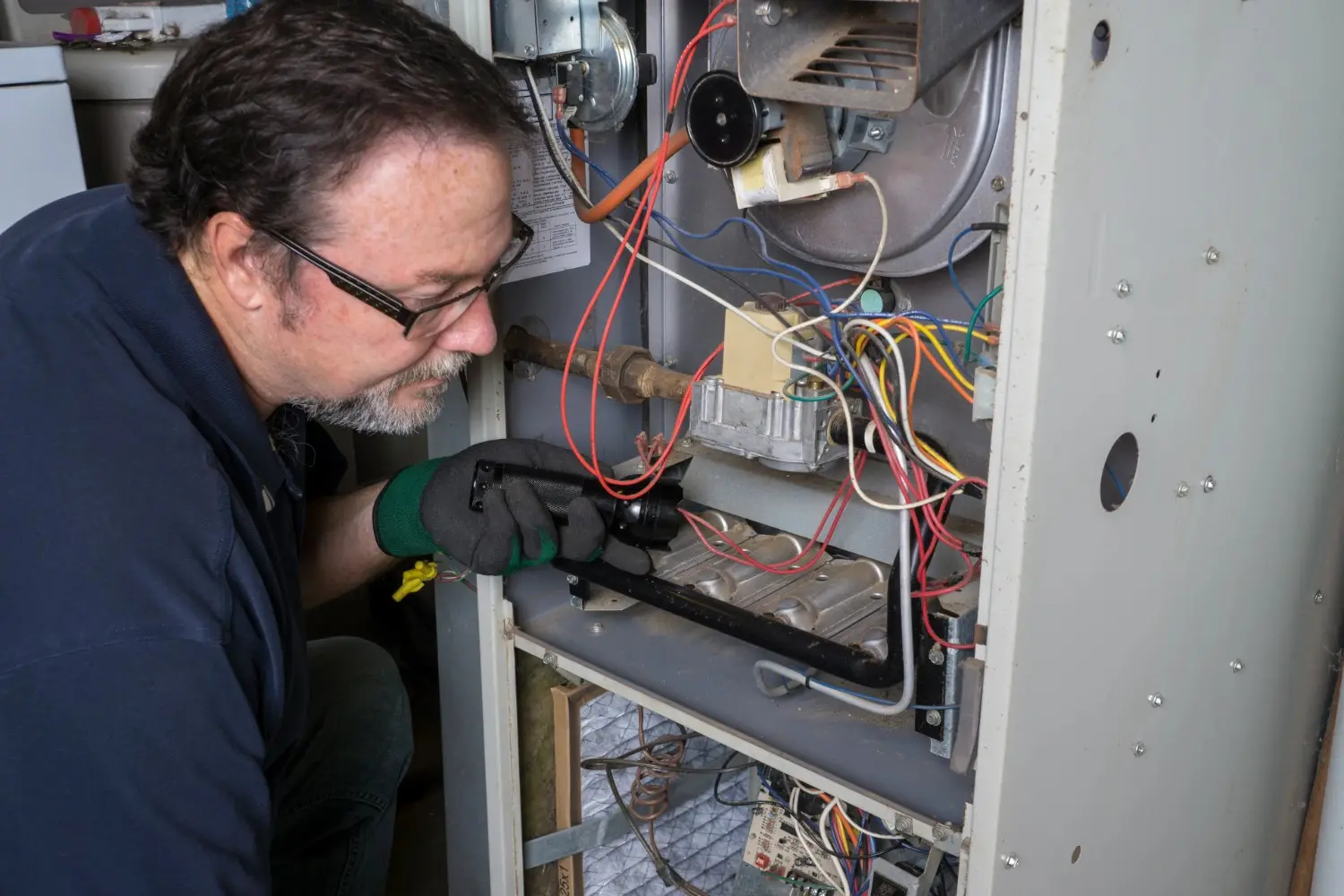
- Visual safety inspection including venting, flue, heat exchanger (where accessible), and combustion stability for gas systems.
- Airflow assessment by inspecting filters, returning registers, blower wheels, and duct connections.
- Electrical check: tighten connections, test capacitors, relays, and controls.
- Component cleaning: burners, pilot assembly, flame sensor, evaporator and condenser coils, and condensate drains.
- Functional testing: thermostat calibration, cycle testing, and fuel or refrigerant performance checks.
- Measurement and documentation of key performance metrics such as temperature rise, amp draw, and pressures where applicable.
- Written inspection report detailing findings, efficiency improvements, recommended repairs, and parts condition.
This documented report serves both as a service record and as evidence for warranty claims where manufacturers require proof of regular maintenance.
Parts and labor coverage, priority scheduling, and customization
A well-structured agreement addresses the full maintenance lifecycle:
- Priority scheduling ensures members are booked early during peak demand (cold snaps or seasonal changeovers), reducing wait times for repairs.
- Parts and labor coverage options can be included to reduce unexpected repair costs and often pair best with older systems where failure risk is higher.
- Custom agreements let homeowners choose inspection frequency, add air quality services, or bundle heating and cooling tuneups to maximize year-round system health.
These features translate into lower lifetime costs by reducing emergency service calls and extending equipment life.
How maintenance saves money and protects warranties
Regular professional maintenance delivers measurable savings and protection:
- Improved efficiency typically reduces monthly energy consumption by ensuring burners, coils, and motors run at design performance.
- Preventing small issues from becoming major failures cuts emergency repair costs and reduces the need for premature system replacement.
- Documented annual service is often a condition of manufacturer warranties. Keeping records reduces the risk of denied warranty claims.
- Extending equipment lifespan through routine care delays capital replacement and increases the return on your original investment.
Practical maintenance tips for Johns Creek homeowners
- Schedule a fall inspection for furnaces and heat pumps and consider a spring check for heat pump cooling components.
- Replace or inspect filters every 1 to 3 months, depending on system type, household pets, and pollen levels.
- Keep outdoor units clear of leaves, mulch, and debris to maintain airflow and prevent coil damage.
- Use programmable or smart thermostats to reduce unnecessary runtime while maintaining comfort during brief cold periods.
- Watch for warning signs: unusual noises, fluctuating thermostat readings, stale or musty odors, or higher-than-normal bills.
Final note on long-term value
Heating Maintenance in Johns Creek, GA, is about more than avoiding a midwinter emergency. It is an investment in system reliability, indoor air quality, safety, and predictable operating costs. A documented, customizable maintenance program with priority service and coverage options reduces risk, protects warranties, and extends the life of your equipment so your home stays comfortable through every season.
Customer
Testimonials


Service Areas