Duct Cleaning in Gainesville, GA
.webp)
Duct cleaning services in Gainesville, GA play an important role in improving indoor air quality and HVAC efficiency, especially in Hall County’s climate. Common issues addressed include dust, allergens, mold spores, pests, and disconnected or leaky ducts. A typical service involves inspection, containment, vacuuming, brushing, component cleaning, optional antimicrobial treatment, and final reporting. Homeowners are guided on signs that indicate cleaning may be needed, recommended service frequency, technician qualifications, expected timelines, and follow-up steps to help maintain healthier air and consistent system performance.
Duct Cleaning in Gainesville, GA
Keeping ductwork clean is one of the most effective ways to improve indoor air quality and HVAC performance in Gainesville homes. With our humid subtropical climate, spring pollen, and fall leaf debris common in Hall County, airborne dust, allergens, and moisture-driven contaminants accumulate faster than in drier regions. This page explains the duct cleaning process used locally, common duct problems in Gainesville, signs your system needs attention, what qualified technicians do, realistic timelines, and the follow-up steps that preserve cleaner air and better efficiency.
Why duct cleaning matters in Gainesville, GA
Dirty ducts restrict airflow, circulate dust and allergens, and can contribute to poor comfort and higher energy use. In Gainesville, seasonal pollen, leftover construction dust from remodels, attic dust intrusion, and periodic high humidity create conditions that make duct cleaning particularly beneficial. Removing built-up dust and biological matter can reduce allergy symptoms, restore balanced airflow to rooms, and help your HVAC system run with less strain.
Common duct issues in Gainesville homes
- Excess dust and debris: Settled dust from local pollen, pet dander, and household particulates.
- Allergens and mold spores: Elevated during humid months and after moisture events.
- Rodent or pest evidence: Nests, droppings, or shed materials entering ducts from attics or crawlspaces.
- Disconnected or leaky duct sections: Reduced efficiency and uneven heating or cooling.
- Dirty supply and return grilles: Visible dust build-up at vents and returns.
- Contaminated blower and coil components: Reduces heat transfer and airflow, increasing run times.
Typical duct cleaning process (what happens during a service)
- Initial inspection and assessment
Certified technicians begin with a visual and camera inspection of the accessible ductwork, registers, and HVAC components to identify where contamination is concentrated and whether there are leaks or damaged sections. - Source identification and containment
Technicians locate the source of debris or contamination—attic access, poorly sealed returns, or gaps around the furnace—and take steps to minimize spread during cleaning, protecting floors and furnishings. - Negative-pressure vacuuming
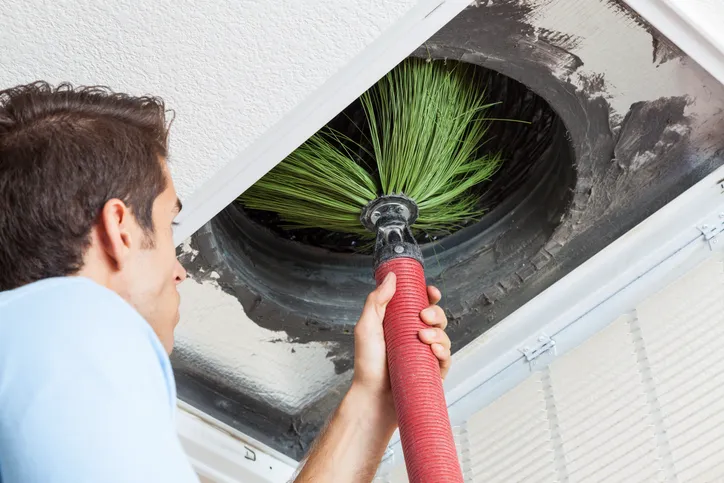
A truck-mounted or high-powered portable vacuum creates negative pressure at the system’s main access point. This pulls dust and debris out of the ducts into a sealed collection system so contaminants are removed from the home environment, not just stirred up. - Brushing and agitation
Rotary brushes, air whips, and agitation tools dislodge settled dust and biological material from the interior duct walls and plenums, allowing the vacuum to extract it thoroughly. - Component cleaning
Air handler components such as the blower, evaporator coil, and drain pan are cleaned. These areas often hold moisture and organic material that contribute to odors and microbial growth. - Optional sanitizing or antimicrobial treatment
When mold, persistent odors, or biological contamination is identified, technicians may recommend an EPA-accepted antimicrobial treatment applied selectively to problem areas. This step is only used where indicated and explained in plain terms. - Final inspection and report
A follow-up camera inspection verifies removal of debris, and technicians summarize findings, any repairs recommended, and maintenance steps to reduce future buildup.
Signs your ducts need cleaning
- Visible dust falling from registers when the system runs
- Increased allergy or respiratory symptoms indoors, especially during peak pollen seasons
- Noticeable musty or moldy odors coming from vents
- Recent home renovation, water damage, pest activity, or a new occupant with allergies
- Uneven heating or cooling and unusual system short cycling
If you notice one or more of these signs in Gainesville, cleaning can be an effective corrective measure.
Recommended frequency for duct cleaning in Gainesville
- General guidance for most homes is every 3 to 5 years.
- In Gainesville, homes with high pollen exposure, pets, smokers, recent renovations, or moisture incidents should consider cleaning every 2 to 3 years.
- Homes with evidence of mold, pests, or chronic allergy problems should have targeted inspections and potentially more frequent cleanings as part of a remediation plan.
Technician qualifications and equipment
- Technicians should hold NADCA or industry-equivalent certification and demonstrate practical experience with residential systems. Certification ensures adherence to standardized cleaning and safety practices.
- Proper equipment includes truck-mounted or portable negative-pressure vacuums, HEPA-rated filtration, rotary brushes and air whips, video inspection cameras, and tools for component-level cleaning.
- Technicians must follow containment protocols to protect your home and be insured and trained to identify and document repairs, such as sealing disconnected ducts or replacing fibrous insulation that’s been contaminated.
Estimated timelines
- Typical single-family homes: 2 to 4 hours for a thorough cleaning of supply and return ducts, vents, and HVAC components.
- Larger homes, complex duct systems, or systems needing repairs can take 4 to 8 hours or may be scheduled across multiple visits.
Technicians provide a pre-service inspection estimate and a post-inspection report summarizing time spent and work performed.
Follow-up recommendations to maintain indoor air quality
- Replace HVAC filters regularly: Use MERV-rated filters appropriate for your system and replace more frequently during pollen season.
- Seal and insulate ducts: Sealing leaks and insulating exposed ducts in attics or crawlspaces reduces dust infiltration and moisture problems.
- Control indoor humidity: Use dehumidifiers or HVAC settings to keep indoor relative humidity between 40 and 50 percent to reduce mold risk. Gainesville’s humid summers make this especially important.
- Schedule routine HVAC maintenance: Annual tune-ups keep coils and blower motors clean and functioning optimally.
- Address moisture and attic ventilation: Repair roof or plumbing leaks quickly and ensure attic ventilation and insulation prevent condensation that can enter ductwork.
- Consider targeted upgrades: Install UV germicidal lights or higher-efficiency filtration when persistent microbial issues exist; these are supplemental measures and should be selected based on inspection findings.
Benefits at a glance
- Improved airflow and more even comfort throughout your home
- Reduced dust and allergen circulation, helping occupants with sensitivities
- Potential energy savings from a less-strained HVAC system
- Cleaner HVAC components that extend equipment life and performance
- Peace of mind when contamination sources are identified and corrected
Duct cleaning in Gainesville, GA addresses both routine maintenance needs and climate-driven risks. When performed by qualified technicians using negative-pressure vacuuming and inspection-grade equipment, it reduces indoor contaminants, helps your HVAC operate efficiently, and supports long-term indoor air quality in homes across Hall County.
Customer
Testimonials


Service Areas